Community cat caretakers are not only responsible for feeding and sterilizing cats, but also for maintaining a tidy premises, addressing any nuisance issues and being a good neighbor. The following tips will help prevent and address common issues that can arise to better support community cats and maintain harmony in the neighborhood.
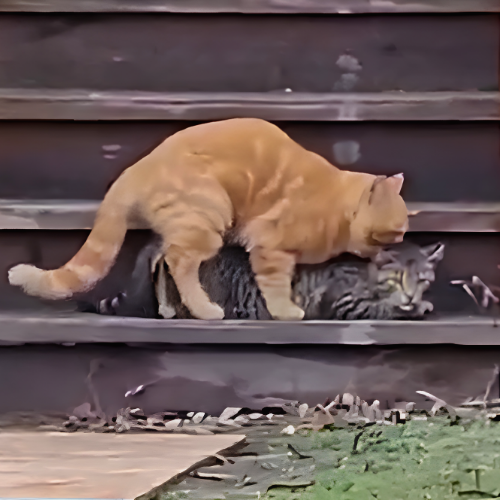
Noise from Fighting and Mating
PROBLEM: Un-neutered male cats fight over territory and females. They can severely injure each other and create a tremendous amount of noise in the process. Female cats will howl when they go into heat to attract male cats. Male cats will also bite female cats on the back of the neck to hold them down while mating, which can cause the female cats to scream and howl.
SOLUTION: TNR (Trap-Neuter-Return). These behaviors will stop once the cats are neutered (males) and spayed (females).
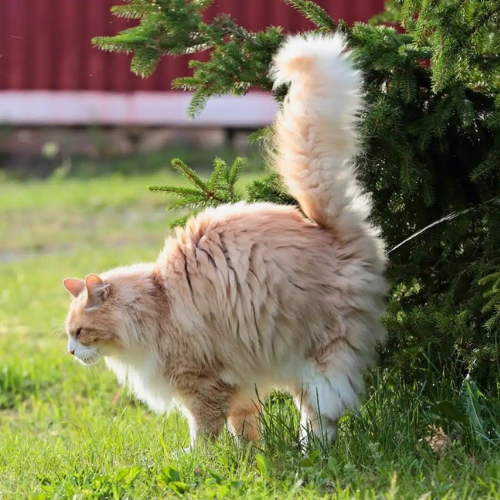
Urine Marking/Strong Urine Smell
PROBLEM: Un-neutered male cats spray to mark territory and their urine has a
terrible, strong smell.
SOLUTION: TNR. Shortly after a male cat is neutered, the testosterone leaves his body and the urine loses its strong odor. The smell will improve significantly after only a couple of days. The testosterone is fully out of the cat’s system in about 3 weeks. Studies show that 93% of male cats stop spraying after they are neutered.

Unwanted Elimination
PROBLEM: Cats are urinating and defecating in undesired locations, such as in a neighbor’s garden, a walkway, or a backyard where kids play.
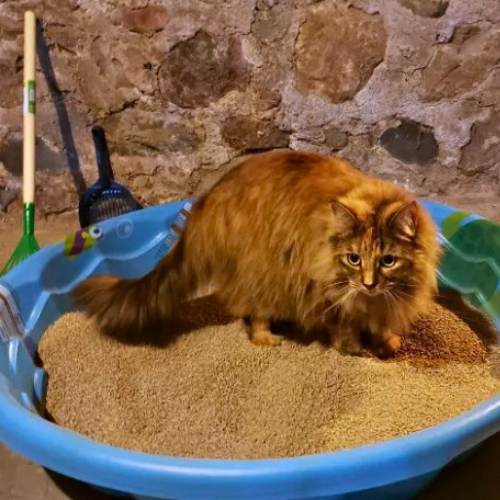
SOLUTIONS: Cats seek out areas that are sandy or have loose dirt, although they may also eliminate on grass or other surfaces. Try to fill in these areas or place something over them to make them less attractive. Cover gardens with chicken wire or cheese cloth. Gardening bricks (pictured) are a good covering for loose dirt, the larger and more jagged, the better. Mulch does not work.
Provide cats with outdoor covered litter boxes, the bigger the better. You can
construct a nice litter box out of a storage tote. Cut two holes, one on each end. Or provide an open sand box or child’s swimming pool filled with sand and scoop it every day.
If one of your neighbors is complaining about cats urinating or defecating in their yard and you haven’t been able to redirect them, offer to clean it up daily and pursue a deterrent (see below).
Neighbor Doesn’t Want Cats in Yard
PROBLEM: Some people just don’t want cats in their yard, even if they aren’t eliminating there. Cats could be sleeping on lawn furniture or seeking shelter under a deck. There could be allergies or a fear of cats.
SOLUTION: To exclude cats altogether from a given area, there are several options:
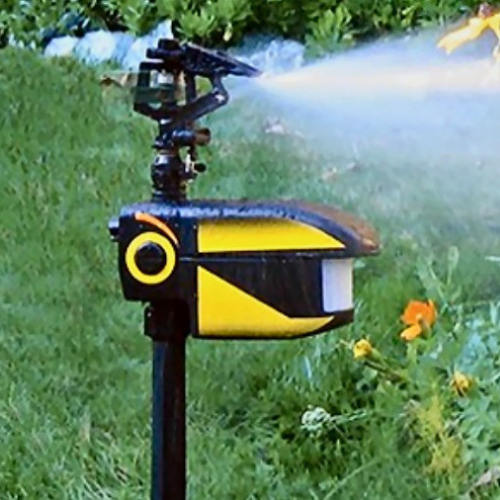
- Set up a motion-detector sprinkler. The Scarecrow and Hoont are popular, inexpensive brands. Many models take batteries or are solar powered, hook up to a garden hose and have an adjustable viewing angle. They only squirt water when something walks in front of them, so they will not run up the water bill. Once the cats learn to avoid an area, the sprinkler can come down.
- Deterrents such as bitter lemon spray, orange peels or hot peppers can provide some temporary relief but will wash away with rain.
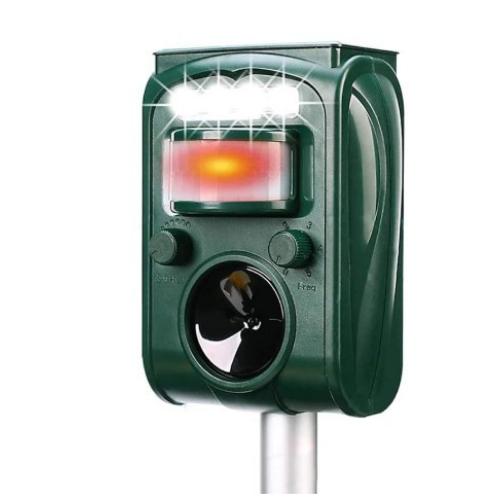
- Motion detector ultrasonic devices emit a high-pitched unpleasant noise, only audible to animals, when something enters the viewing angle. Several devices may be necessary to place around the entire perimeter of a yard. ZeroCat Repellent is a popular brand.
- A tall fence can also be effective in redirecting cats. A cat fence with a slippery angled top piece can actually keep cats in a yard because they are unable to climb over it.
Cats Come at Different Times, Are Hard to Catch
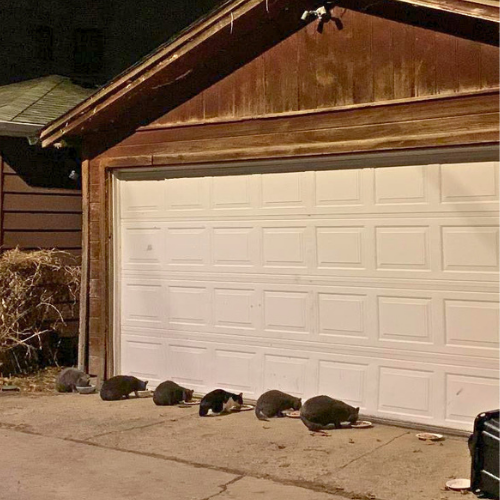
PROBLEM: The cats don’t show up at the same time. Sometimes they come in the middle of the night, so trapping is difficult.
SOLUTION: For people feeding cats, it is very important to get them on a regimented eating schedule, 1x or 2x daily. Do not feed more than twice daily, as cats will never be hungry. Don’t just put food out at the same time each day, take away any leftover food after no more than 45-60 minutes. Do not leave food out all day long and make sure every speck of food is cleaned up and gone at night. If you are currently free feeding, it may take some time to reduce the eating window to a more manageable time frame. The cats will eventually learn the schedule. It’s ok if they miss a meal. They will not “starve to death.” Train them, don’t let them train you.
If you are already meal-feeding cats and don’t see some cats every day, someone else in the neighborhood is feeding. Pass out flyers, post in neighborhood groups and talk to the mail carrier to find out who it is. Then coordinate feeding/trapping with your neighbor.
Wildlife is Causing Problems
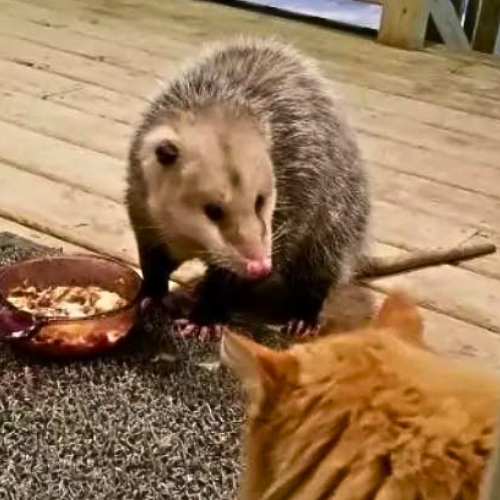
PROBLEM: Other animals are eating the cat food, attacking the cats (raccoons,
coyotes, foxes), living/defecating in shelters, scaring the cats away, causing damage to property or drawing unwanted attention from the community.
SOLUTION: DO NOT FEED WILDLIFE! It doesn’t matter if other animals aren’t fighting with the cats. Wildlife doesn’t need cat food and shelter. Cat food is not healthy for them and you are only asking for trouble. Neighbors who have dogs will be very upset by attracting skunks. There may also be laws prohibiting ground feeding of wildlife, punishable by a citation or fine.
Establishing a routine eating schedule will help feed only the cats (see above). Other animals are more nocturnal, so feeding earlier in the day is ideal.
Elevating food onto a table that other animals can’t jump onto, possibly including a metal skirt around the perimeter is effective against most wildlife, including raccoons.
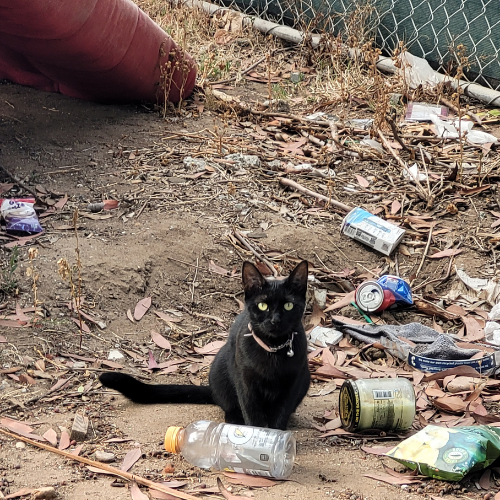
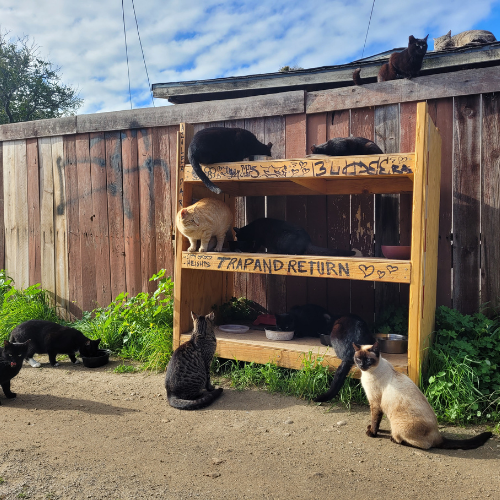
Untidy Area, Plates/Cans Creating Trash
PROBLEM: Food left out can attract wildlife. Plates and cans left behind can blow away, create trash for the neighborhood and attract unwanted attention from neighbors.
SOLUTIONS: As with the eating schedule, designating a specific feeding location is critical in training cats to congregate in a specific area. Do not travel to find cats and feed them where they happen to be each time. If cats are in a certain area, there is a feeder nearby. Spend the time finding out who that is. If you don’t own your own property, you may need to get permission from the property owner or be sensitive to neighbors’ concerns if you are feeding in a public area.
For large colonies, use multiple bowls and spread them out, so cats aren’t fighting over the same bowl. Pick up any bowls, plates or cans after the cats eat to keep the area tidy. Avoid using paper or Styrofoam plates that can blow in the wind, littering the neighborhood. Placing bowls in a sheltered area helps to keep food dry when it rains or snows. If there isn’t a sheltered area, you can build a feeding station out of a storage tote. Cut holes in both ends so cats can see through.